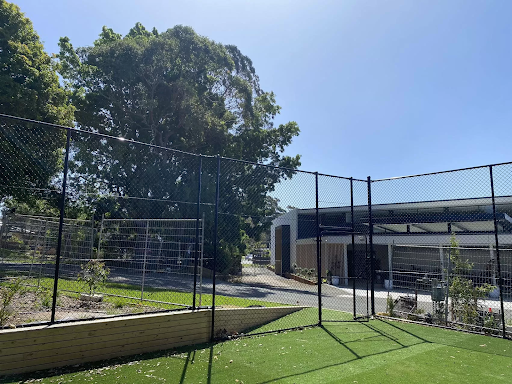
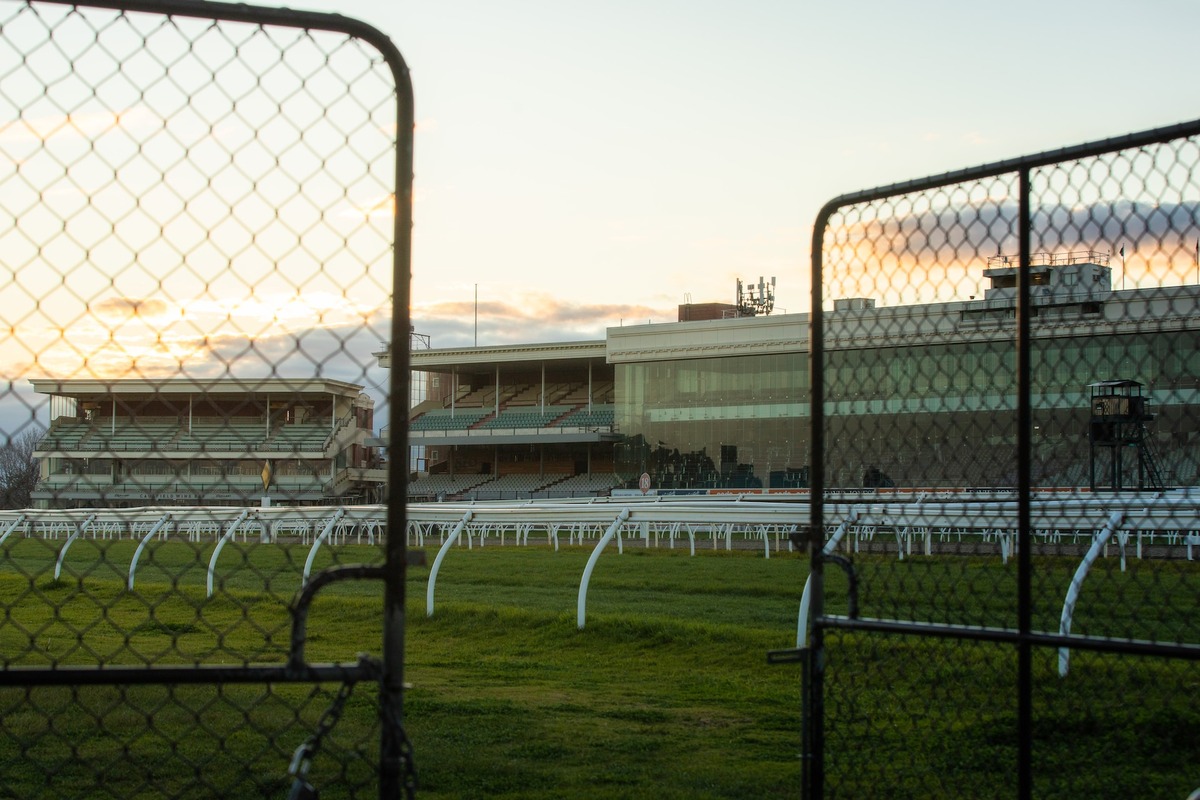
Chain wire fencing is one of the most practical and cost-effective fencing solutions available in Sydney. Whether you are securing a residential backyard, a commercial site, or a sports court, choosing the right specification makes the difference between a fence that performs for 20 years and one that needs replacing in five.
This guide covers the four decisions that matter: purpose, wire gauge, coating, and height.
What Is Chain Wire Fencing?
Chain wire fencing — also called chain link, chainmesh, or cyclone fencing — is made from interwoven steel wires formed into a diamond-shaped mesh, stretched between steel posts set in concrete. It is widely used across Sydney for residential boundaries, school grounds, industrial perimeters, sports courts, and construction sites.
The reasons it remains so popular are straightforward: it is affordable, low maintenance, durable in Sydney’s climate, and quick to install over long runs.
Step 1 — Know What You Are Fencing For
Your application drives every other decision. Here are the most common uses and what each requires.
Residential Backyards and Boundaries
For keeping pets in, defining property lines, or securing a rental, a standard 1.8m galvanised or PVC-coated chain wire fence with 2.5mm wire is the right choice. It is affordable, requires almost no maintenance, and gets the job done cleanly.
Commercial and Industrial Sites
Warehouses, factories, and depots across Western Sydney use chain wire fencing because it is difficult to climb, handles vehicle impact, and works over large perimeter runs at a fraction of the cost of alternatives. Specify 3.15mm wire gauge at 2.1m to 2.4m height for these applications.
Schools, Sports Courts and Construction Sites
Schools need chain wire fencing for sightlines and containment. Sports courts need 3.0m to 4.0m height with heavier mesh to handle ball impacts. Construction sites use it as a compliance requirement — temporary chain wire fencing is fast to erect and remove as the site progresses.
Step 2 — Choose the Right Wire Gauge and Mesh Size
| Wire Gauge | Best For |
|---|---|
| 2.50mm | Residential, light commercial, temporary fencing |
| 3.15mm | Commercial, industrial, schools, sports courts |
| 4.00mm+ | High-security perimeters and government facilities |
For mesh aperture (the size of each diamond), 50 x 50mm is the standard for most residential and commercial applications. Sports courts and cricket nets use a tighter 45mm or smaller aperture to stop balls passing through.
Step 3 — Choose the Right Coating
Galvanised
Zinc-coated steel in a silver-grey finish. The standard for industrial, commercial, and rural applications where appearance is secondary to cost and performance. Lasts 15 to 25 years in most Sydney conditions.
PVC-Coated
A coloured polymer layer (usually green or black) applied over galvanised wire. Neater appearance, better corrosion resistance, and a must-have for coastal Sydney properties — Northern Beaches, Eastern Suburbs, and Sutherland Shire — where salt air accelerates corrosion on bare steel.
Step 4 — Determine the Right Height
| Application | Standard Height |
|---|---|
| Residential side/rear boundary | 1.2m – 1.8m |
| Commercial perimeter | 1.8m – 2.1m |
| Industrial / high-security | 2.1m – 2.4m |
| Sports courts (tennis, basketball) | 3.0m – 4.0m |
In NSW, most residential side and rear fences up to 1.8m are exempt development — no council approval needed. Fences above this, or front fences above 1.2m, may require a development application. Check with your local council before specifying a taller fence.
How Much Does Chain Wire Fencing Cost in Sydney?
| Application | Height | Installed Cost Per Metre |
|---|---|---|
| Residential boundary | 1.2m – 1.8m | $60 – $100 |
| Light commercial / school | 1.8m – 2.1m | $80 – $130 |
| Industrial perimeter | 2.1m – 2.4m | $100 – $150 |
| Sports court | 3.0m – 4.0m | $140 – $220 |
Prices include posts, concrete footings, and mesh installation. Gates and security toppers (barbed wire, anti-climb extensions) are quoted separately.
Frequently Asked Questions
What is the difference between chain wire, chainmesh, and chain link fencing?
They are the same product. Chain wire, chainmesh, chain link, and cyclone fencing all refer to the same diamond-pattern interwoven wire mesh. The terms are used interchangeably across Australia.
How long does chain wire fencing last in Sydney?
A properly installed galvanised chain wire fence typically lasts 15 to 25 years. PVC-coated mesh in coastal areas extends that lifespan by providing additional corrosion protection. Regular inspection and prompt repair of broken ties or posts will maximise the fence’s life.
Do I need council approval for a chain wire fence in NSW?
Most residential side and rear chain wire fences up to 1.8m qualify as exempt development under the NSW planning codes — no DA required. Heritage-listed properties and some specific council areas have additional requirements. When in doubt, check with your local council before starting.
Can chain wire fencing be used for pool enclosures?
Standard chain wire mesh is generally not compliant with Australian Standard AS 1926.1 for residential pool barriers, as the openings allow for climbing. Dedicated pool fencing — glass, aluminium slat, or purpose-built pool mesh — is the correct solution. Contact Longain Fencing to discuss compliant options.
Get a Free Quote from Longain Fencing
Longain Fencing installs chain wire fencing across all of Sydney — from residential backyards in the Hills District to industrial perimeters in Western Sydney and coastal properties on the Northern Beaches and Eastern Suburbs. We supply and install all wire gauges and heights, in galvanised and PVC-coated finishes.
Contact our team for a free, obligation-free site measure and quote.