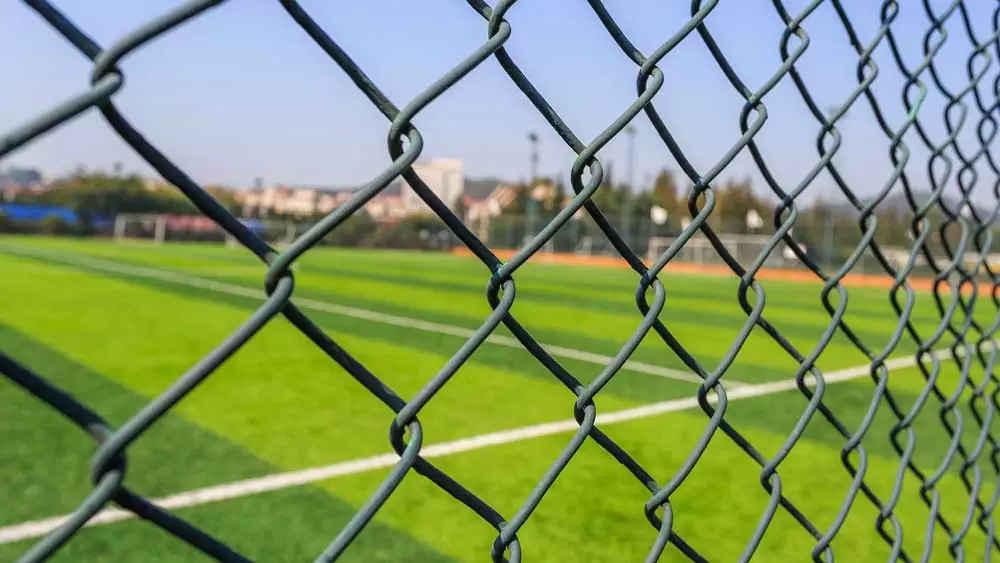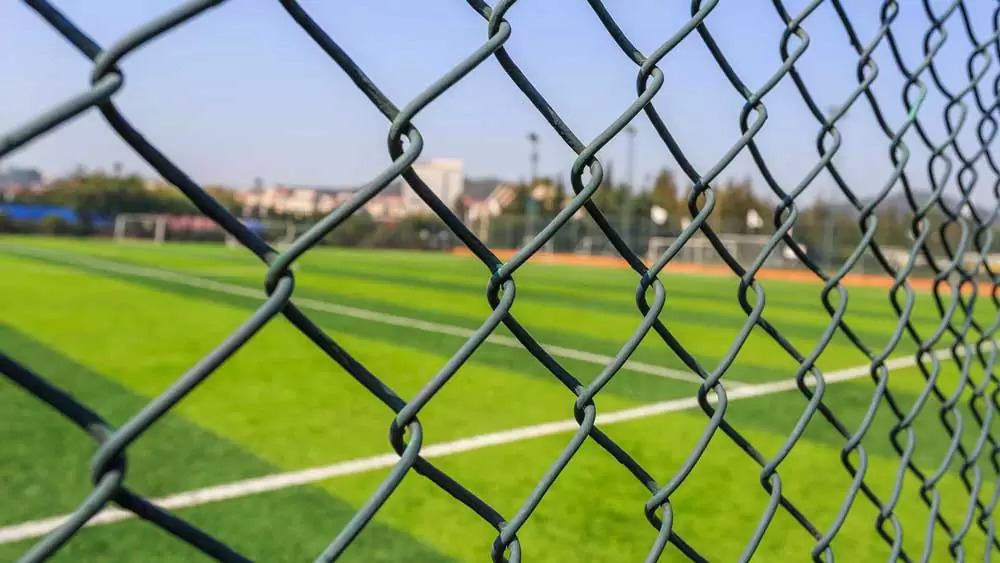
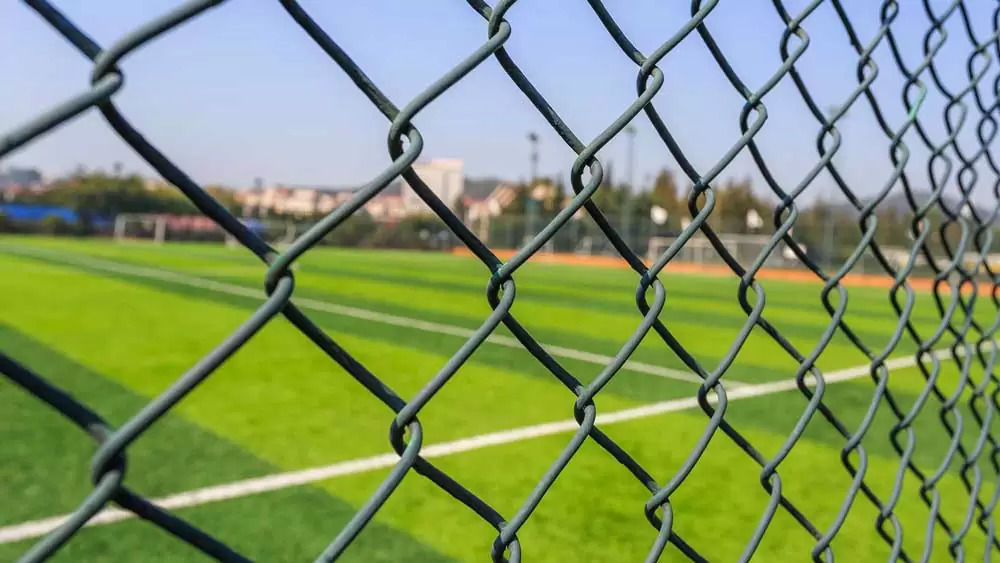
Chain wire fencing secures more Sydney boundaries per dollar than any other fence type we install. It goes up fast, copes with sloping blocks and coastal air, and scales from a backyard dog run to a kilometre of industrial perimeter. The catch is that it is specified, not bought off a shelf: the rail system, mesh, coating, posts and gates all need to suit your site.
After more than 20 years installing chain wire across Sydney and NSW, these are the decisions we walk every client through before a single post goes in.
What Is Chain Wire Fencing?
Chain wire (also called chainlink, chainwire or cyclone fencing) is a steel mesh woven from zig-zag wires that hook into each other to form a diamond pattern. The mesh is stretched between steel posts and held tight with tension wire, with or without horizontal rails.
Because the weave is interlocking rather than welded, the mesh flexes under impact instead of snapping. A knock that would dent a Colorbond sheet or crack a timber paling is absorbed by the fence. Wind passes straight through the openings, so it stays standing in exposed spots where solid fences take a beating.
Not sure whether chain wire is the right type for your situation? See our overview of what a chainwire fence is and how it compares to other names and styles.
Where We Install It Across Sydney
- Homes: side and rear boundaries, pool surrounds, dog runs and veggie gardens, where you want security without blocking light or airflow.
- Construction and development sites: permanent site perimeters and temporary fencing that can be moved as the job progresses.
- Commercial and industrial sites: warehouse perimeters, storage yards, loading areas and chain wire storage cages.
- Schools, councils and sporting facilities: ovals, playgrounds and sports court enclosures for tennis, cricket nets, basketball and netball.
- Rural properties: long boundary runs, livestock yards and equipment compounds.
Decision 1: Choose Your Rail System
The rail system sets the fence’s strength and most of its cost, so it is the first thing to settle. The more pressure the fence will take from people, vehicles or wind, the more rails it needs.
| System | What it is | Best for | Relative cost |
|---|---|---|---|
| Railless | Mesh held by tensioned wire top and bottom, no horizontal rails | Backyards, rural boundaries, storage areas, long runs where everyday security is enough | Lowest |
| Top rail | A steel rail along the top keeps the mesh tight and stops sagging | Schools, sports facilities, commercial sites with steady foot traffic | Mid |
| Top and bottom rail | Rails at both edges lock the mesh in and stop the base being lifted | Warehouses, factories, construction sites, anywhere the fence takes knocks | Highest |
A common mistake is going railless on a site that sees forklifts, trolleys or crowds leaning on the fence. It looks the same on day one but sags and loosens far sooner. The good news: a top rail, or top and bottom rails, can be retrofitted to an existing chain wire fence that has started to lose tension.
Decision 2: Get the Mesh Right
Three things define chain wire mesh: the size of the diamond, the thickness of the wire, and the coating that protects it.
Diamond Size
A 50mm diamond is the everyday standard for homes, schools and commercial sites. It keeps people out while staying easy to see through. Tighter diamonds are worth it where you need to stop small animals, balls or hands getting through, such as pet enclosures and some sports courts.
Wire Thickness
Lighter gauge wire (around 2.5mm) suits residential and light commercial fencing. Heavier gauge wire (around 3.15mm) is the right call for industrial perimeters, high-security sites and anywhere the fence will be leaned on, climbed or hit. Heavier wire costs a little more up front but holds its shape for years longer under load.
Coating: Galvanised, PVC or Aluminised
- Galvanised: a zinc coating over the steel. It is the most economical choice and performs well in most suburban and inland Sydney locations.
- PVC (vinyl) coated: a polymer layer over galvanised wire, available in black or green. It adds weather protection and blends into gardens, schools and sports grounds rather than standing out. We recommend it for coastal suburbs, where salt air shortens the life of bare galvanised mesh.
- Aluminised: an aluminium-based coating offering strong corrosion resistance for demanding environments.
If you are near the water in the Eastern Suburbs, the Northern Beaches or the St George area, factor the coating into your budget from the start. Replacing rusted mesh years early costs far more than the coating upgrade does today.
For a detailed comparison of finishes, see our guide on black chainwire vs galvanised: which finish suits your Sydney property.
Decision 3: Posts, Footings and Height
Mesh is only as strong as the frame holding it. Post size, post spacing and footings must match the fence height and the load the site will put on it.
Round Steel Posts
Chain wire uses round galvanised steel tube posts (CHS) rather than the square posts used on panel fences. As a rough guide, a 1.8m residential fence uses lighter posts, while a 2.4m or 3.0m commercial perimeter needs larger diameter posts set closer together. Corner, end and gate posts are always heavier than the line posts in between, because they carry the full tension of the mesh.
Concreted Footings
For permanent fences, every post is set in concrete. Footings stop the fence leaning, resist wind load and make it impossible to push over or lift at the base. Temporary fencing for building sites and events uses free-standing feet instead, so it can be moved as the job changes.
Height
- 1.2m to 1.5m: garden borders, pet areas and low-risk boundaries.
- 1.8m: the typical residential and school boundary.
- 2.4m to 3.0m: commercial and industrial perimeters, where height alone stops most opportunistic entry.
- Above 3.0m: ball-stop fencing for cricket nets and sports courts.
Sydney Ground Conditions
Sloping blocks, sandstone, clay and tight access are part of fencing in Sydney. Chain wire handles slopes better than rigid panels because the mesh follows the ground instead of stepping down in blocks. Where rock or access rules out machinery, our crews dig and set posts by hand.
For a full breakdown of what installation involves and what affects the cost, read our guide on chainwire fence installation in Sydney.
Decision 4: Gates and Security Add-Ons
A gate is the weakest point in any fence unless it is built to the same standard as the run beside it. We build chain wire gates to match the fence’s height, mesh size and coating, so the opening is as secure as the boundary.
Gate Options
- Pedestrian swing gates: single gates for backyards, side access and school entries.
- Double swing gates: wider openings for cars, trailers and maintenance vehicles.
- Sliding gates: for driveways and industrial entries where there is no room for a gate to swing.
Security Toppings
For commercial, industrial and government sites, barbed wire or razor wire along the top of the fence makes climbing far harder. Barbed wire uses twisted strands with sharp points. Razor wire uses flat, bladed tape and is the stronger deterrent. Both can be continued across the gates and retrofitted to an existing fence. Local council rules can limit where these toppings are allowed, so we confirm what is permitted before quoting.
Privacy Slats
Chain wire is see-through by design, which is a security advantage: there is nowhere to hide behind it. Where you do want screening, privacy slats woven through the mesh block the view while keeping the strength of the fence.
Looking After Your Chain Wire Fence
A well-installed chain wire fence needs very little from you. There is no painting, oiling or rotting timber to replace. A quick check once or twice a year keeps it in shape:
- Walk the line and look for loose tie wires, sagging mesh or gaps at the base.
- Clear vines and built-up garden beds off the mesh, as they hold moisture against the wire.
- Check gate hinges and latches, and tighten anything that has worked loose.
- Touch up any scratched or cut galvanising before rust takes hold.
If a section is damaged by a vehicle or a fallen branch, it can be repaired section by section rather than replacing the whole run. For larger sites, our commercial fence repair service handles re-tensioning, post replacement and mesh repairs.
Why Sydney Chooses Longain Fencing for Chain Wire
Chain wire is our most requested fence, and we have installed it for homeowners, builders, schools, councils and government sites across Sydney and NSW.
- Over 20 years of fencing experience in Sydney conditions
- Fully licensed and insured, with every job built to Australian Standards and council requirements
- A dedicated supervisor on every project, from the first post to the final gate latch
- Sites left clean, with no wire offcuts or debris behind
- Servicing all of Sydney, from Penrith to the Eastern Suburbs, plus the Central Coast
See recent installations in our project gallery or browse the full chain wire fencing range.
Planning a Chain Wire Fence?
Tell us about your site and we will recommend the right rail system, mesh and coating, then give you a clear, no-obligation quote.
Call 1300 816 166 (after hours 0412 838 131), email sales@longainfencing.com.au, or request a free quote online.
Frequently Asked Questions
What is the difference between chain wire and chainlink fencing?
Nothing. Chain wire, chainlink, chainwire and cyclone fencing are all names for the same woven diamond mesh fence.
Which rail system do I need?
Railless suits most homes and rural boundaries. Choose a top rail for steady foot traffic, and top and bottom rails for sites where the fence takes knocks from vehicles, equipment or crowds.
Galvanised or PVC coated?
Galvanised is the economical standard for most suburban and inland sites. PVC coating in black or green looks more finished and lasts longer in coastal air.
How tall should my chain wire fence be?
1.8m is typical for homes and schools. Commercial and industrial perimeters usually go to 2.4m or 3.0m, often with barbed or razor wire on top.
Can you add rails or barbed wire to my existing fence?
Yes. Top rails, bottom rails, barbed wire and razor wire can all be retrofitted to an existing chain wire fence.
How much does chain wire fencing cost in Sydney?
Price depends on height, length, mesh, coating, rail system and gates. Railless is the most affordable option per metre; rail systems and security toppings add materials and labour. Call us for a free, site-specific quote.