
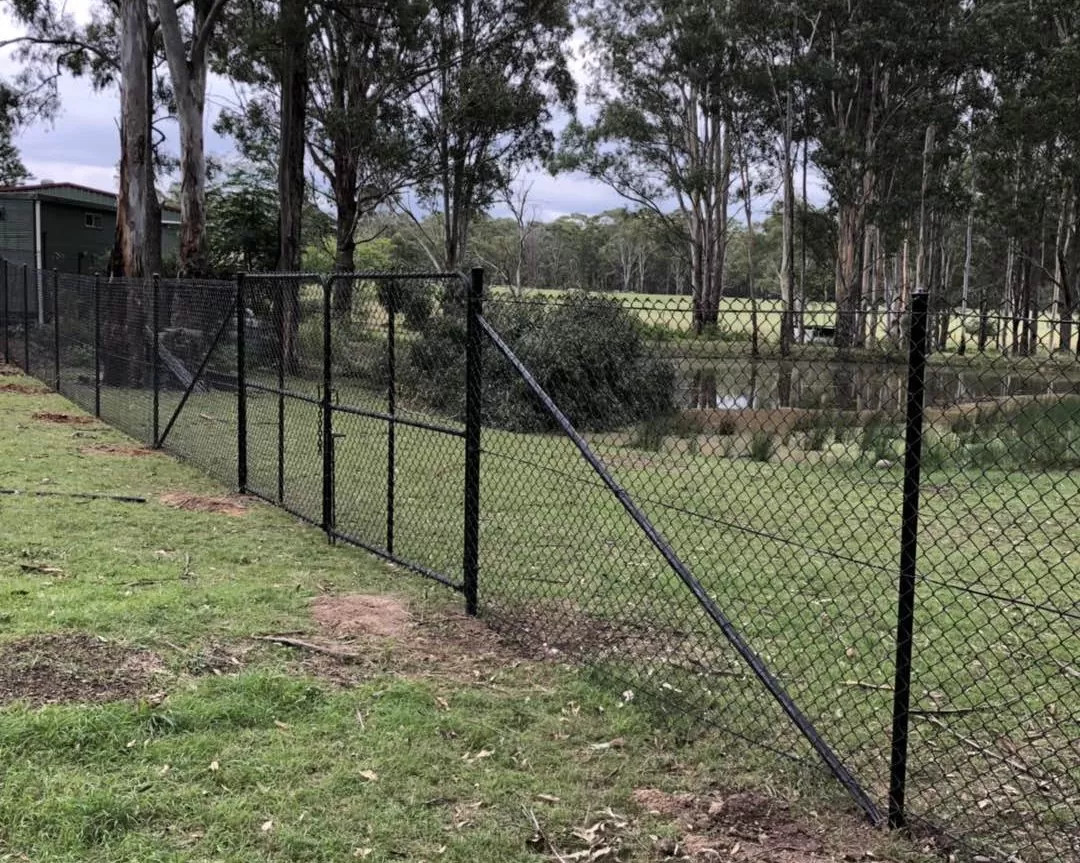
How Much Does Chainwire Fence Installation Cost in Sydney?
Chainwire fence installation is one of the most affordable ways to secure a property in Sydney, with prices starting from around $60 per metre. That figure is a starting point, not a promise. The final price moves with the height, the coating, the type of posts and rails, and how easy your site is to work on.
Here is what pushes a quote up or down:
| Cost factor | Effect on price |
|---|---|
| Fence height | Taller fences need heavier posts, more mesh and deeper footings |
| Railless or top and bottom rail | Rail systems cost more than railless tension wire |
| Galvanised or PVC coated mesh | PVC coating and heavier wire cost more up front but last longer in harsh conditions |
| Total length | Longer runs usually bring the price per metre down |
| Gates | Pedestrian gates, double drive gates and sliding gates are priced on top of the fence |
| Barb wire arms or other security extras | Add material and labour |
| Site conditions | Rock, slopes, concrete, tree roots and tight access add time and equipment |
| Removal of an old fence | Demolition and disposal are usually quoted separately |
For wider price comparisons across materials, see our fence cost per metre guide and our post on affordable fencing ideas in Sydney.
The Chainwire Fence Installation Process, Step by Step
A professional install follows the same sequence every time. Knowing it helps you judge whether a quote is complete.
- Site visit and measure. The installer walks the line, checks levels, access and soil, and talks through height, finish and gates.
- Written quote. You receive a quote that lists materials, labour, gates and extras.
- Boundary and approvals check. Confirm where the boundary sits and whether anything needs approval before work starts.
- Mark out and check for services. The fence line is pegged out and underground services are checked before any digging.
- Set the posts. End, corner and gate posts go in first, then the line posts, set at the correct depth and spacing.
- Fix the rails or tension wire. This is the frame that holds the mesh tight.
- Stretch and fix the mesh. The mesh is unrolled, pulled tight and tied off so it does not sag.
- Hang the gates. Gates are fitted, adjusted and tested with their latches and locks.
- Clean up. A good crew removes offcuts and debris and leaves the site tidy.
On concrete or rock, the posts are fixed differently. Our post on installing chainwire fencing on concrete explains the options.
How Long Does Installation Take?
Timeframes depend on length and site conditions, but real jobs give a useful guide. One Longain customer had a PVC chain fence installed over two days. Another had nearly 200 metres of fencing finished in two days by a full crew. A third had their job completed within a week of accepting the quote.
A small backyard boundary can be done in a day or two. Large commercial and industrial perimeters take longer and are usually run by a site supervisor from the first post to the final gate latch.
When the site makes it harder
Difficult sites do not make a chainwire fence impossible, but they change the method and the price:
- Slopes and uneven ground: the mesh can be worked to follow the land, but posts and rails need careful setting out. See our guide to installing chainwire fencing on sloping land.
- Rock and tight access: when machinery cannot get in, posts are set by hand, which takes longer. One customer had a small job with heavy rock, difficult access and no machine access, and it was completed through the rain.
- Concrete and hard surfaces: posts are core drilled or fixed with base plates instead of being set in soil.
- Existing fences: removing and disposing of an old fence adds time.
What a Good Chainwire Fence Quote Should Include
Two quotes for the same fence can differ by hundreds of dollars because they are not quoting the same thing. Before you accept one, check that it states:
- The fence height and total length in metres
- Mesh type, wire thickness and coating (galvanised or PVC)
- Post size, spacing and how they are set (concrete, soil or base plate)
- Railless or top and bottom rail
- Gates, with sizes, hinges and latches
- Removal and disposal of any old fence
- Who is responsible for approvals, boundary checks and clean up
- The installer’s licence and insurance details
Neighbours and council
If the fence sits on a shared boundary, your neighbour may have rights and responsibilities under NSW dividing fence rules. Our post on whether a neighbour can put up a fence without your permission explains the basics. Height limits and approval requirements depend on the property and the fence’s purpose, so read our guide to chainwire fence height and Australian standards in NSW before you commit.
Chainwire Fence Installation FAQs
How much does a chainwire fence cost per metre?
Prices start from around $60 per metre in Sydney. The final figure depends on height, coating, posts, gates and site access, so a written quote is the only reliable number.
Is chainwire cheaper than Colorbond or timber?
It is generally one of the lowest cost permanent options. Our affordable fencing ideas post compares chain wire, treated pine and Colorbond.
Do I need a gate?
Most properties do. Gate type and size should be decided before the fence is quoted. See our chainwire gates guide.
Can you install over concrete or on a slope?
Yes. Both need a different method, and both are covered in our guides on concrete and sloping land.
What areas do you cover?
We install across Sydney and NSW. Contact us to confirm coverage for your location.
Get a Free Chainwire Fence Installation Quote
Longain Fencing is a fully licensed and insured fencing contractor with more than 20 years of experience across Sydney and NSW. Every chainwire fence installation is led by a dedicated supervisor and finished to Australian standards.
Call 1300 816 166 or request a free quote online. Browse our chain wire fencing range to see what is available.